Why do plants start unevenly? Main agrotechnical reasons
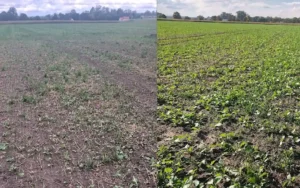
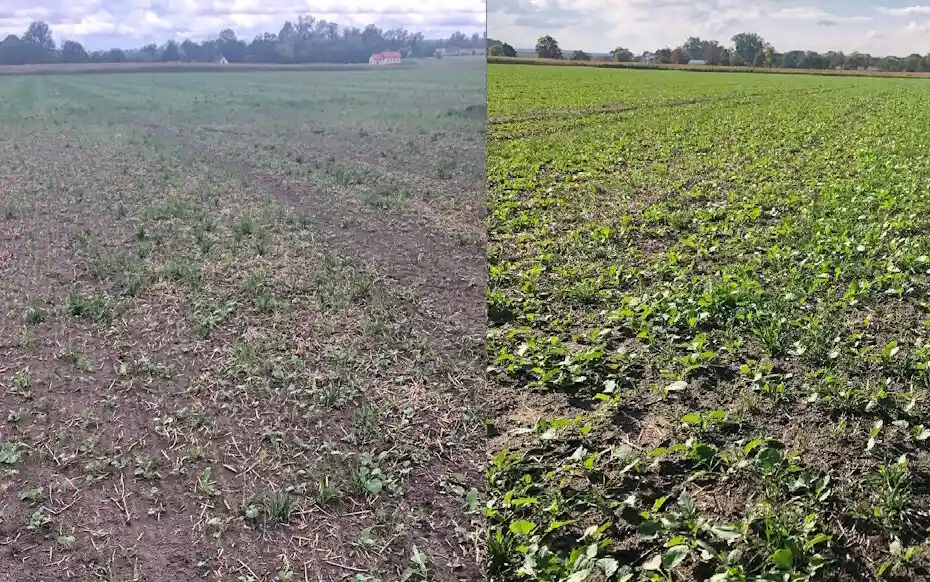
The main agrotechnical reasons responsible for uneven emergence after sowing are: heterogeneous aggregate structure of the soil, local drying of the seed layer and low biological activity of soil microorganisms. When the seed material is placed in a substrate with different humidity and density, the seed swelling process takes place at different rates. This results in a situation in which the plants start unevenly, appearing on the surface in waves. Such heterogeneous initial development directly limits the yield potential of the entire crop, which cannot be compensated for in the later stages of vegetation.
Drought stress and plant emergence – how does lack of water block germination?
Lack of water in the soil layer blocks seed germination stopping the enzyme hydration process responsible for releasing reserve materials in the grain plant. When intense drought stress occurs and plants emerge, seeds may go into secondary dormancy or die after partial swelling. The deficit of precipitation combined with high temperature causes the top layer of soil to quickly lose capillary moisture. In such conditions, the key challenge for the farmer is to implement solutions that improve water retention. This phenomenon is intensified in sites with low humus content, which are unable to maintain an optimal water-air balance.
Reduced tillage and grain emergence – challenges of no-till systems
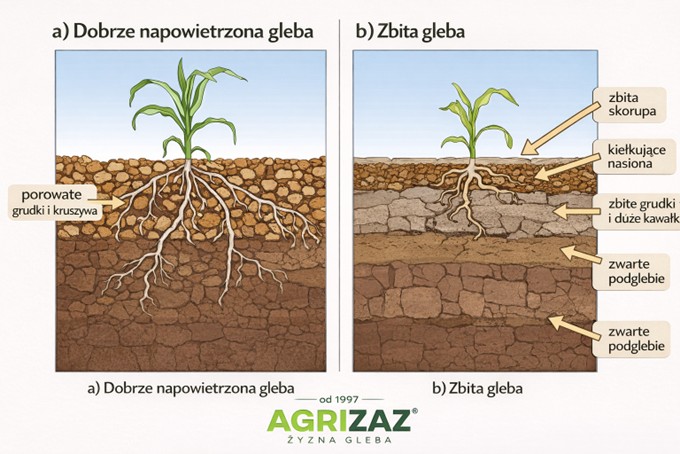
The challenges of no-till systems in terms of germination arise from uneven distribution of crop residues and different density of the top layer of the roll. When simplified tillage and cereal germination are analyzed, the main obstacle turns out to be difficult contact between the seed and the soil, caused by the remaining straw. The mulch layer can also locally lower the soil temperature, which delays and differentiates the moment of start of individual plants. Additionally, in no-till systems, the soil is often compacted on the surface, which makes it difficult for young seedlings to break through the top crust. To eliminate these physical barriers, it is necessary to intensively rebuild biological life, which naturally loosens the soil profile.
Poor emergence of maize and rapeseed – errors in seedbed preparation
Poor emergence of maize/rapeseed is most often a direct consequence placing the seeds too deep in unconsolidated soil or drying out the soil due to an excessive number of tillage operations. Rape, as a small-seeded plant, requires extremely precise, shallow sowing into a substrate with an intact capillary structure. In turn, maize sown during spring winds encounters dry layers of soil, which results in a phenomenon known as lack of emergence after sowing in lighter parts of the field. The most serious errors include:
- Carrying out pre-sowing tillage at too great a depth,
- Abandoning rolling the soil after sowing in positions susceptible to moisture loss,
- Mismatch between the sowing date and the current soil moisture level.
What for better emergence? Methods of activating the soil potential
Effective methods for activating the soil’s potential for better emergence include: introduction of humic substances into the soil, reconstruction of the aggregate structure and colonization of the rhizosphere with beneficial strains of bacteria. These activities are aimed at creating a uniform physicochemical environment for each sown seed. Instead of foliar interventions, you should focus on the soil zone, stabilizing the soil parameters from the moment the seed is placed in it. The comprehensive approach involves simultaneous improvement of the physical and biological properties of the agrotechnical site. Specialists are perfect for implementing this strategy products soil products with a broad spectrum of action, which permanently eliminate the causes of non-uniform start.
Humic acids in agriculture as a natural water store
Humic acids in agriculture act as a natural water store thanks to their high sorption capacity, which allows them to bind an amount of moisture exceeding their own weight. Humus particles have numerous functional groups capable of retaining water molecules in the soil structure and limiting their gravitational outflow or evaporation. During periods without rain, these substances provide the seeds with the necessary moisture, securing the swelling process.
What are the benefits of using humic acids in agricultural practice? First of all, it stabilizes humidity conditions in the critical phase of germination, regardless of the weather. Additionally, organic carbon reacts with clay minerals, permanently improving the water retention of light and degraded soils.
How to improve soil biological activity and stimulate roots?
To improve the biological activity of the soil and stimulate the roots, it is necessary supply the substrate with organic matter combined with beneficial microorganismsthat initiate biochemical processes in the rhizosphere. Active soil microbiology intensively colonizes the surroundings of the young root system, secreting natural metabolites and growth phytohormones. These compounds give a direct impulse to plant cells to build strong lateral and root hair roots. In addition, selected soil bacteria have the ability to:
- Releasing forms of starting phosphorus blocked in the soil,
- Accelerating the mineralization and humification of plant residues,
- Improving overall fertility and making available microelements from the soil solution.
Thanks to this, the young plant gains access to a stable nutritional base from the first days, which directly translates into uniform emergence of cereals and other wide-row crops.
How to speed up plant emergence with Humus Active technology?
To accelerate plant emergence with technology Humus Active, the preparation should be applied to the soil before sowing or in early spring, which allows for the immediate delivery of humic acids and useful microbiology directly to the seed layer. This preparation activates natural soil processes that eliminate mechanical and chemical barriers that block the swelling of seeds. Thanks to the unique colloidal structure of organic substances, the soil gains optimal plasticity and structural stability. As a result, the seeds have constant access to oxygen and moisture, which forces the embryo to undergo rapid and dynamic initial growth.
What are the benefits of using humic acids with active microbiology?
The use of humic acids with active microbiology gives a guarantee of parallel improvement of the physical parameters of the soil and intensification of biochemical processes occurring in the root zone. The combination of organic carbon with live strains of bacteria and fungi stimulates the mineralization of organic matter and releases blocked forms of phosphorus, nitrogen and potassium. Humic substances form stable complexes with nutrient ions, which prevents their regression and leaching into the soil profile. Microorganisms produce enzymes and growth compounds that directly stimulate cell division in young roots. From the first days after germination, plants gain a balanced supply of water and nutrients, which allows for full leveling of the canopy.
Improving soil structure in the practice of Patron Farms
Improving soil structure in practice Patronage Farms (OPGP) has proven that combining advanced agrotechnics with a direct cooperation model allows farmers to maximize profits while regenerating the site. Our National Patronage Farms Program is a unique initiative in which AGRIZAZ representatives reach directly to agricultural producers, completely bypassing traditional distribution and intermediary margins. Thanks to this, farmers who join our community gain permanent discounts approximately -50% price for most soil products intended for own acreage. Joining the program is completely transparent and free of hidden obligations – the only condition is to have a farm, a one-time purchase of the minimum logistics requirement (half a pallet, i.e. 12 of 20l canisters) and hanging an information banner on the fence.
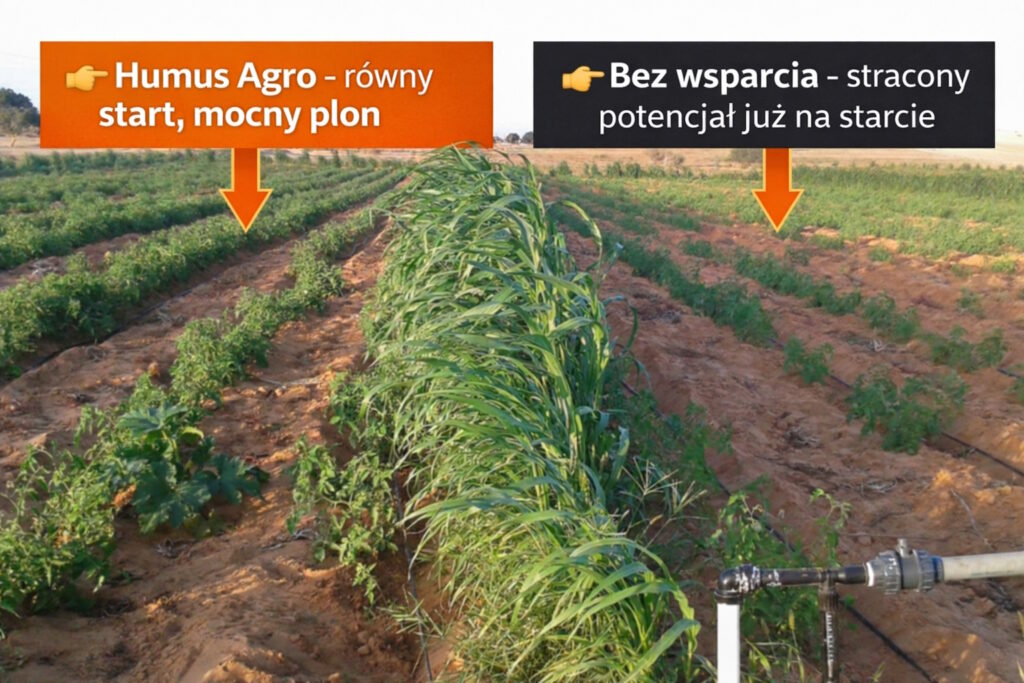
Invest in a balanced start – check out the offer of AGRIZAZ fertilisers
Investing in advanced soil preparations is the most effective way to protect the crop against losses caused by uneven emergence after sowing. Our portfolio includes unique products that combine the power of organic carbon with active biological life. Thanks to the many years of experience of our team, we provide full advisory support in the selection of optimal soil regeneration technologies. Don’t let drought stress destroy the potential of your crops at the beginning of the season.
Contact us via the official website to choose a solution perfectly suited to the specificity of your agrotechnical position: https://www.agrizaz.pl/