Why does soil depletion in Poland force us to change our fertilisation strategy?
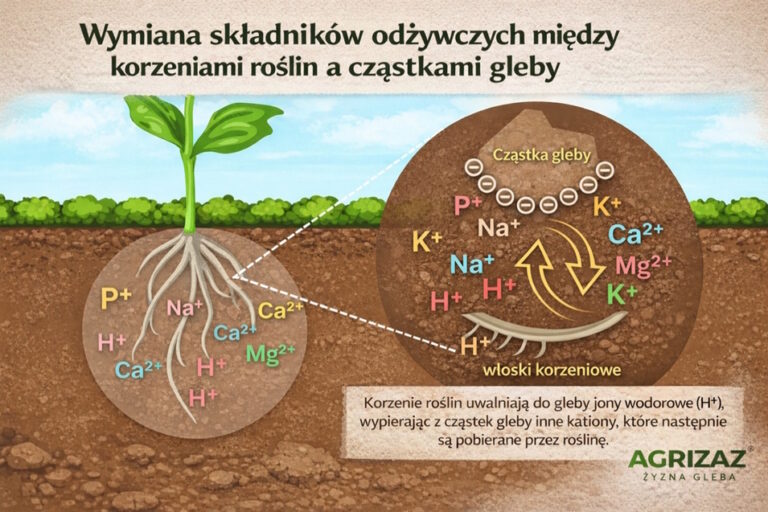
Changing the fertilisation strategy is necessary because over 60% of arable land in Poland consists of light and very light soils, which naturally they are characterized by low ability to retain nutrients and water. The existing schemes based solely on intensive mineral fertilisation (NPK) no longer bring the expected increases in yields. Without a stable biological foundation, macroelements are blocked in the sorption complex. Farmers observe a situation in which laboratory analysis shows high soil abundance, and plants at the same time show deep symptoms of mineral deficiencies. The change in approach involves shifting the burden of agrotechnics from chemical growth stimulation to biological activation of the soil environment.
Where does the chronic shortage of organic matter come from?
The chronic deficiency of organic matter in Polish soils is primarily due to: long-term use of crop rotation simplifications with a dominant share of cereals and maize in monoculture. Intensive mechanical cultivation, especially deep plowing, accelerates the process of humus mineralization, i.e. its oxidation to carbon dioxide. The situation is aggravated by the low level of organic matter balance caused by the removal of straw from fields without the simultaneous introduction of alternative carbon sources. The results of research on chemical and agricultural stations clearly indicate that the level of humus has increased in many regions of the country in the last decade even dropped by 30%. Restoring balance requires immediate implementation of regenerative practices that will stop this trend.
Lack of manure on the farm and progressive degradation of humus
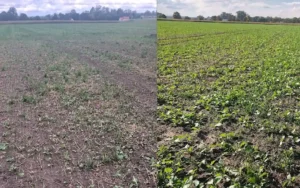
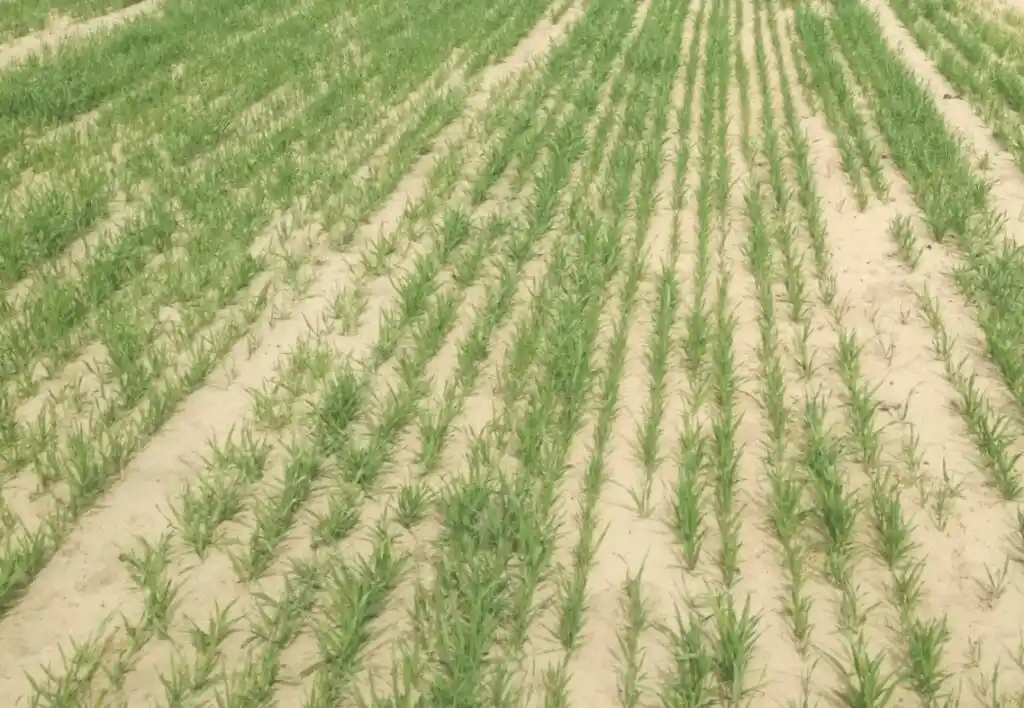
Lack of access to manure on farms without stocking results inbreaking the natural closed cycle of organic matter and accelerates the structural degradation of the soil profile. Traditional manure provided not only nitrogen and phosphorus, but above all it was a source of ready-made humic acid precursors and diverse microflora. In pure plant production conditions, soil aggregates become destabilized, which leads to the compaction of the arable layer and the formation of a plow sole. This phenomenon makes uneven emergence after sowing become a common problem because dry and compacted soil prevents uniform capillary absorption of water into the seeds. The solution for farms without livestock is the use of concentrated soil improvers, such as: Humus Active, which provide the substrate with the necessary organic matter and active microorganisms.
How effectively does the reconstruction of organic matter in the soil protect the arable profile?
Effective restoration of organic matter protects the arable profile through creation of a stable lumpy structure, which protects the soil against wind and water erosion and mechanical compaction. Humus acts as a natural binder in the substrate, combining loose mineral particles into durable aggregates that are resistant to washing away by heavy rains. Increasing the organic carbon content directly translates into increasing the sorption capacity, which limits the process of leaching nutrients into groundwater.
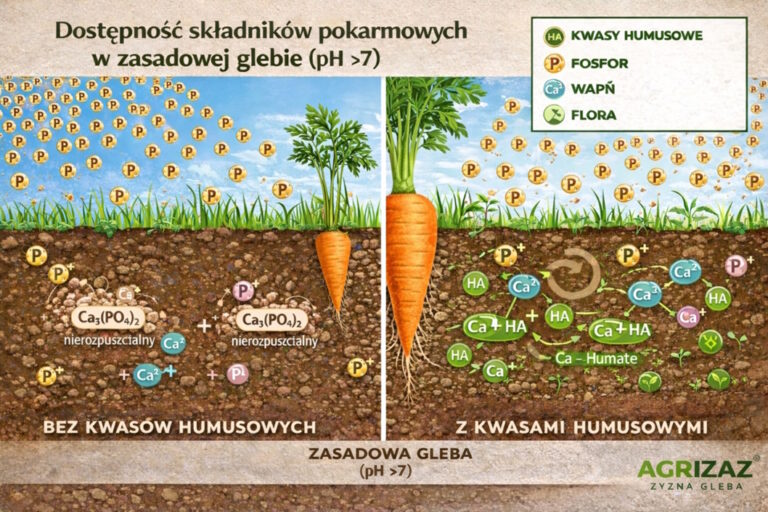
Topsoil rich in humus becomes more flexible, easier to cultivate and creates optimal conditions for the development of the root system. Moreover, the high content of organic matter stabilizes the soil pH, which makes it easier for plants to absorb previously blocked forms of phosphorus and potassium.
Effective management of crop residues and proper fertilisation with straw
Effective management of crop residues depends on them precise fragmentation and even scattering on the field surface and quick mixing with the top layer of soil to initiate humification processes. Straw left in the field is a valuable source of potassium, carbon and other macro- and microelements, but its proper decomposition requires the presence of nitrogen and active microorganisms. In the absence of appropriate bacterial flora, mineralization occurs instead of humification, which leads to carbon losses and blocking of soil nitrogen by cellulolytic bacteria. To prevent this, it is worth applying preparations to the stubble that accelerate the decomposition of cellulose and lignin. Properly processed plant mass becomes a substrate for building permanent humus, improving the physicochemical parameters of the site for subsequent crops.
Cover crops for plowing as a free biomass factory
Cover crops grown for plowing work as natural, free biomass factory, delivering huge amounts to the soil profile fresh organic matter and easily available nutrients. A properly selected cover crop mix, consisting of legumes, phacelia or mustard, can produce from a dozen to several dozen tons of green mass per hectare within a few months. The roots of these plants penetrate deep layers of the arable profile, loosening the structure of the subsoil and drawing washed out minerals back to the root zone of subsequent plants. The introduction of catch crops into the crop rotation allows for an effective break in grain monoculture and significantly reduces the pressure of soil-borne diseases. This biomass, when mixed with soil, becomes a breeding ground for beneficial bacteria and earthworms, stimulating the biological life of the entire site.
Water retention in the soil and improvement of the structure of light soil before winter
Improving water retention and structure of light soil before winter involves: maximally increasing its ability to retain autumn-winter rainfall by building a sorption complex rich in humus compounds. Increasing the humus content by just 1% allows additional 150 cubic meters of water to be retained in the arable layer for each hectare of crops. This water is stored in micro- and mesopores, from where plants can freely draw it during periods of spring rainfall deficit. The lumpy structure prevents the formation of soil crust after winter thaws and allows proper aeration of the root system. Thanks to this, biological processes in the soil are not inhibited, and winter crops gain optimal conditions for wintering and quick, even emergence at the start of the new growing season.
Modern solutions Agrizaz – durable active humus in granules
The implementation of humate-microbiological technologies allows for: quick compensation for organic carbon shortages without the need to drastically change the current farming system. The AGRIZAZ portfolio of preparations provides the soil with concentrated and highly stable humus compounds that immediately react with the mineral fraction of the soil. This treatment initiates regenerative processes, imitating the action of multi-ton doses of traditional natural fertilisers. Providing ready-made topsoil eliminates the problem of time-consuming evolution of crop residues in fields subjected to intensive chemicalization. Thanks to this, the farmer can be sure that his sites will regain the proper agrotechnical culture in a short time.
Organic-mineral fertilisers and soil bacterial microflora in practice
Concentrated organic-mineral fertilisers enriched with active microbial strains act as an efficient catalyst in the arable profile, which accelerates the formation of permanent humus and optimizes the release of bound macroelements. Specialized introduced into the ground soil bacterial microflora it immediately colonizes the crop rhizosphere, initiating the dynamic decomposition of cellulose and lignin remaining after the harvest of the forecrop. Beneficial bacteria transform these hard-to-reach structures into compounds easily digestible by plants, while preventing the development of dangerous pathogenic fungi. The use of this technology in field cultivation allows for a significant increase in the biological efficiency of tired sites and reduces the loss of expensive NPK ingredients.
Change the humus balance and permanently protect your crops
Effective reconstruction of organic matter in the soil it is the foundation of profitable and safe plant production, especially in the face of ongoing weather anomalies and the lack of natural fertilisers on the farm. Proper management of straw, catch crops and supporting the soil with humic acid technology allows you to permanently eliminate the problem of drying out fields and releases blocked reserves of nutrients. Switching to biological methods of site regeneration is an investment that pays off in the form of stable and high crop yields while reducing financial outlays on traditional mineral fertilisation.
Discover our full portfolio of certified soil improvers on our home page at: https://www.agrizaz.pl/