
What are humic acids and how are they divided in agriculture?
Humic acids are natural high molecular weight organic compounds, which are formed in the process of decomposition and secondary synthesis of plant residues in the soil environment. These substances constitute the most important, biologically active component of humus, determining the physicochemical parameters of each type of substrate. In agriculture, they are divided into three main fractions: humic and fulvic acids and humins. Each of these groups has different chemical properties, molecular weight and degree of solubility in water with different pH. Systematic supply of these compounds allows for the reconstruction of tired sites without the need for a drastic change in cultivation technology.
Humic and fulvic fractions – equal roles in the soil profile
Humic and fulvic acids perform different, but equivalent and complementary functions in regulating the fertility and productivity of the soil profile. Humic acids they are characterized by a more stable, porous structure, thanks to which they bind perfectly with mineral particles and build the physical structure of the substrate. On the other hand fulvic acids they show much greater mobility in the soil solution, thanks to which they act ad hoc and transport mineral ions directly to plant cells. The first of these fractions is responsible for creating a stable organic base of the field, while the second improves the current nutritional efficiency of the site. The combination of both these structures in agrotechnology guarantees sustainable growth of biomass and long-term protection of humus resources.
How does proper humification of organic matter build field fertility?
Proper humification of organic matter involves: biochemical transformation of plant residues into complex, degradation-resistant humus compounds under the influence of the activity of beneficial soil microorganisms. This process prevents rapid oxidation of coal and turns straw lying in the field into a durable, stable organic substance with powerful buffering properties. This synthesis takes place most effectively in conditions of optimal aeration of the substrate and the constant presence of specialized bacterial strains. The humus created in this process is the most important storehouse of macro- and microelements, which are gradually released during the phases of intensive crop growth. The correct course of this biological cycle eliminates the problem of site fatigue and builds constant field fertility for subsequent seasons.
Why is agricultural drought a growing crisis?
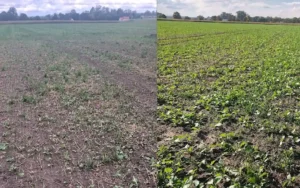
The phenomenon known as agricultural drought is a growing agricultural crisis because chronic water deficit in key phases of vegetation prevents plants from absorbing minerals and drastically reduces the size of the harvested crops. When there is a lack of moisture in the soil, previously applied chemical fertilisers act with a long delay or are completely reversed, which causes sudden stoppages in crop development. Instead of building biomass and quality parameters, plants use energy to activate defense mechanisms against water stress. This problem is particularly visible in lighter, permeable sites and those subject to intensive mechanical cultivation without biological protection. Yield stabilization in such conditions requires the implementation of technologies that radically increase the natural retention of the soil.
How does the active action of humic acids in the soil retain water?
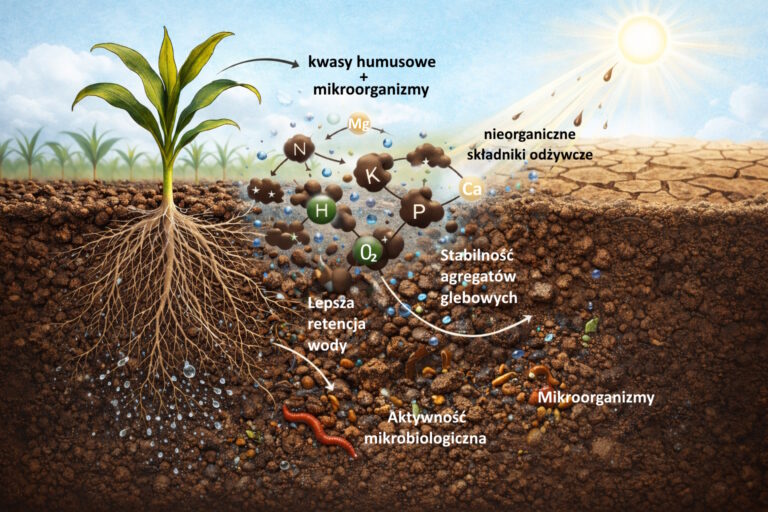
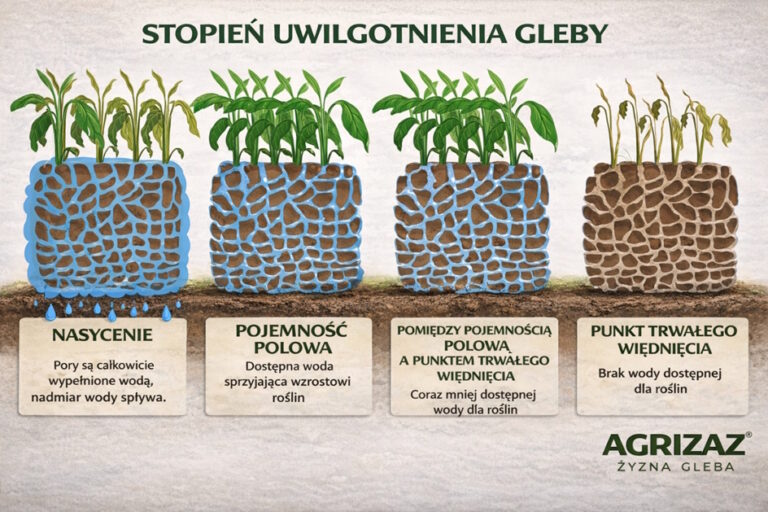
The active effect of humic acids in the soil retains water through drastic increase in the absorbency of the topsoil, which begins to function in the field structure like a highly efficient biological sponge. The porous structure of humate acids allows them to bind and retain masses of rainwater, which in a dry substrate would immediately flow away by gravity into the deeper layers of the profile. These substances also minimize losses caused by rapid evaporation from the ground surface during intense sunlight. Thanks to these properties, moisture is maintained in the immediate vicinity of the rhizosphere for a much longer time, which allows plants to survive periods without rainfall. This procedure builds stability and predictability of crops in seasons with extremely unfavorable rainfall patterns.
Water retention in agriculture, or how to create an underground storage facility
Effective water retention in agriculture is sustainable increasing the content of stable organic matter in the arable profile to a depth of 30 centimeters, which allows for the retention of moisture masses directly in the root zone. Soil enriched with humus compounds radically changes its retention parameters, enabling the creation of an efficient water buffer on each hectare of crops. Building such a powerful underground warehouse makes the crop independent of expensive irrigation systems and protects the farm’s capital against the effects of drought.
How to maintain a stable lumpy soil structure in the dry season?
A stable lumpy soil structure in the dry season can be maintained by: delivery of organic colloids, which permanently combine loose dust particles into stable soil aggregates resistant to scattering and wind erosion. Humic compounds act as a natural binder in the substrate, preventing the formation of a hard surface crust after unexpected, sudden rainfall. The aggregate structure of the soil ensures optimal water infiltration and protects deeper layers against uncontrolled moisture loss due to evaporation. This structure also guarantees constant access of oxygen to the root zone, which is a condition for the proper course of plant metabolic processes. Maintaining this form of the substrate eliminates the problem of mechanical resistance of the soil during the development of young root hair systems.
How to unlock trapped minerals and strengthen the soil sorption complex?
Strengthening and rebuilding the physicochemical properties of the substrate takes place through: increasing the cation exchange capacity, which is directly created by efficient functioning soil sorption complex. When there is a lack of humic compounds in the soil, the nutrients provided quickly form compounds that are difficult for plants to access. Humic acids act in this environment as a natural ion exchanger, breaking down blocked mineral structures and returning the elements to the soil solution. This process causes the nutrients to be stably bound on the surface of the colloids, from where crops can take them according to their current physiological needs. Sorption restoration is the only permanent method to stop mineral waste on the farm.
Low soil pH and microelements – how to overcome chemical barriers?
It causes a phenomenon known as low soil pH drastic blockage of the availability of key nutrients, such as phosphorus, calcium or magnesium, while rapidly activating aluminum, which is toxic to the roots. In an acidic environment, traditional mineral fertilisation loses its effectiveness because mineral ions enter into strong, inseparable reactions with iron and manganese particles. Overcoming this chemical barrier requires the introduction of humic substances with a high buffering potential, which isolate ions from the unfavorable reaction of the substrate.
Humic acids stabilize the pH in the immediate vicinity of the rhizosphere, creating a safe zone for plants to obtain food. Thanks to this, crops can develop properly even in places with an unregulated acid-base ratio.
Chelation of trace elements and transport directly to the roots
Natural chelation of microelements consists of: surrounding metal ions, such as iron, zinc, copper or manganese, by fulvic acid molecules, which protects them from shrinking and getting stuck in the soil. The chelated compounds formed in this process have excellent solubility in water and easily move in the soil profile with moisture. The mobile fulvic fraction acts as an active transporter, delivering valuable micronutrients directly into the cells of the root hair system. This process is extremely dynamic, eliminating the risk of hidden nutritional deficiencies during periods of intensive biomass building. Biological chelation is the most effective form of plant nutrition under stressful conditions.
A way to remove blocked ingredients in the soil and wash out mineral fertilisers
The most effective way to remove blocked ingredients in the soil and to wash out mineral fertilisers at the same time regular use of concentrated humate extracts rich in active functional groups. These substances permanently bind free ions of macroelements, preventing their irreversible escape to deeper layers of the profile during heavy rainfall. At the same time, organic acids stimulate the secretion of specific substances by the roots, which activate previously unavailable phosphorus and potassium reserves accumulated in the ground. This action means that fewer ingredients escape beyond the reach of the crop, and more are deposited where the plants build the yield. The agrotechnical effect is a sharp increase in the utilization rate of each unit of pure ingredient provided in artificial fertilisers.
Portfolio Agrizaz – activate your field and gain stability in the season
The introduction of proven products from the AGRIZAZ company’s portfolio into agrotechnics allows for simultaneous regenerating the physical, chemical and biological properties of a tired site. Certified solutions, such as Humus Active or Humus Agro, deliver a powerful dose of humic acids and beneficial bacterial microflora to the substrate, which guarantees more stable operation of the field during periods of weather anomalies. By using these products, farmers observe slower soil drying and much better use of traditional mineral fertilisation.
Humus Active and product portfolio as fuel for microbiology
Preparation Humus Active and other AGRIZAZ brand solutions act as a highly energetic fuel in the soil environment, stimulating beneficial microorganisms to immediately multiply and colonize the root zone. The bacterial microflora introduced together with the humus component quickly begins to mineralize and humify crop residues, eliminating the phenomenon of site fatigue. The constant presence of these bacterial cultures in the rhizosphere limits the development of dangerous soil-borne pathogens, building the natural immunity of the crop. Detailed rules for the use of this technology, supported by substantive opinions of satisfied agricultural producers, can be verified by checking the conditions they offer Patronage Farms AGRIZAZ.
Choose the natural effects of humic acids
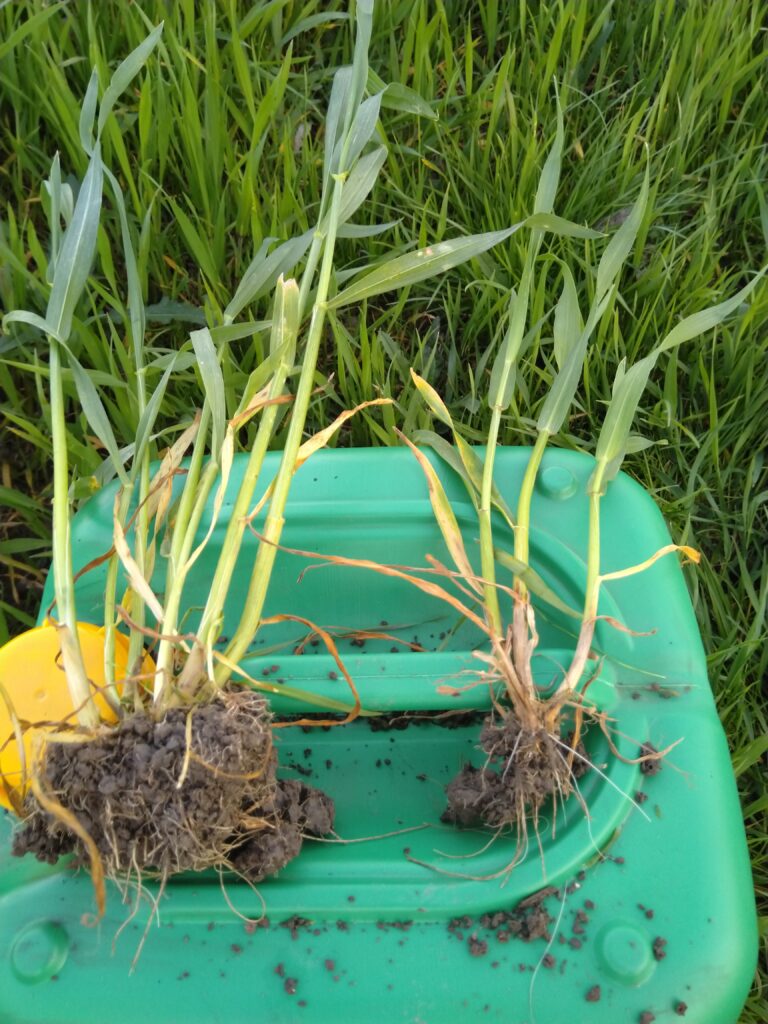
Investing in the reconstruction of the sorption complex and stabilization of the lumpy structure is the only effective way to stop the leaching of mineral fertilisers and protect crops against agricultural drought. Understanding how humic and fulvic fractions work together in the soil profile allows farmers to actually reduce the costs of purchasing chemicals while releasing minerals locked in the ground. Instead of looking for short-term solutions, it is worth focusing on long-term biostimulation, which builds stability and predictability of yields for years.
If you want to introduce Humus Active technology on your farm or check the rules for joining the affiliate program for this season, visit our home page at https://www.agrizaz.pl/.
Frequently asked questions (FAQ)
How do humic acids work?
Humic acids work through physical and biological reconstruction of the soil structure, consisting in permanently combining mineral particles into stable lumpy aggregates and a sharp increase in the sorption capacity of the substrate. These substances function in the arable zone like a natural sponge that absorbs and stores rainwater, protecting plants against drought. Additionally, they act as a natural chelator, facilitating the transport of blocked minerals directly to the root hair system of crops. The constant presence of these compounds activates beneficial microflora and optimizes air and water conditions in the rhizosphere.
What are the disadvantages of fertilisers with humic acid?
The main feature of fertilisers with humic acid, considered a disadvantage by some producers, is the lack of an immediate visual effect in the form of intense greening of the crop within 48 hours of application, which distinguishes them from aggressive nitrogen fertilisers. These products take time to activate biological processes in the soil, acting as a long-term foundation for the site’s fertility, not as a temporary growth stimulator. In addition, liquid forms with a high concentration of organic matter require the use of clean water in sprayers to avoid possible clogging of dense section filters. The effectiveness of their operation also depends on the degree of hydration of the substrate during the treatment.Do humic acids acidify the soil?
No, humic acids do not acidify the soil, but have strong buffering properties that stabilize the pH of the substrate and optimize the conditions for the development of the root system. Despite the presence of weak acid groups in their macromolecular structure, these compounds neutralize the toxic effect of free aluminum in acidic places and facilitate the uptake of phosphorus. In soils with high pH, the fulvic fraction prevents the depletion of microelements, facilitating their continuous uptake by plants. The action of humates aims to create a balanced physicochemical environment in the arable profile.