Why do cultivation simplifications weaken the parameters of your fields?
Cultivation simplifications allow you to reduce costs and work time, but after a few seasons they cause problems disturbing the natural physicochemical balance of the soil. Abandoning traditional mechanical cultivation in the absence of appropriate biological compensation leads to a drastic decrease in the organic matter content. Earth deprived of fresh organic structures begins to lose its retention and aggregate properties. The result of this process is systematic degradation of soil structure, which becomes susceptible to compaction and loss of natural productivity. For the farmer, this means deterioration of the site parameters and the need to look for methods of substrate regeneration.
Where does soil crusting and drying out after rainfall come from?
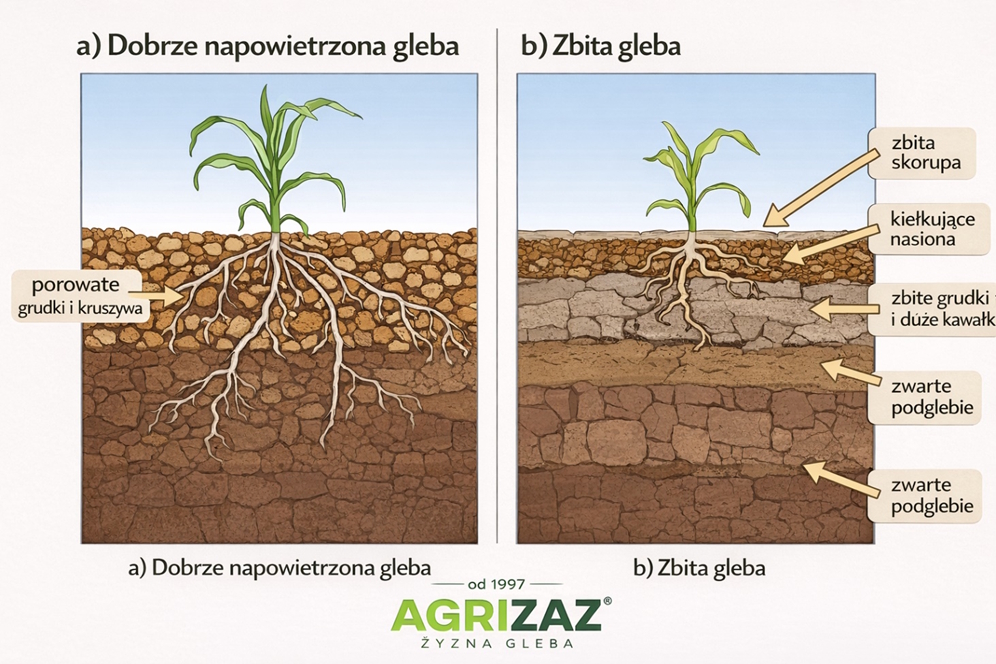
Soil crusting after rainfall and rapid drying of the earth are caused directly by disappearance of the stable lumpy structure and deficit of humic compounds in the top arable layer. When there is a lack of humus in the soil, the mineral particles are atomized by the impact of raindrops and then form a compact, impermeable crust on the surface. This phenomenon blocks the free flow of air and evaporation, which, in the absence of a natural colloidal cover, accelerates the loss of moisture from the deeper layers of the profile. Without aggregates, the ground cannot retain water from storm rainfall, which leads to its rapid drying on sunny days. Permanently eliminating these agrotechnical barriers requires rebuilding the level of organic carbon.
Poor start of plants and shallow root system in monoculture
Poorer emergence and shallow root systems of plants are a direct result mechanical compaction of the substrate and lack of aeration of the rhizosphere zone. The compact and hard plowed layer constitutes a physical barrier that young roots cannot penetrate, forcing them to develop only in the shallow, top layer of soil. This arrangement prevents crops from taking up water and minerals from deeper resources of the soil profile, drastically limiting their vigor at the beginning of the vegetation period. The situation is worsened by monoculture, which leads to the accumulation of root toxins and pathogens in one arable horizon. As a result, plants are poorly anchored, susceptible to lodging and show severe growth inhibition.
What factors determine whether the land works properly to produce crops?
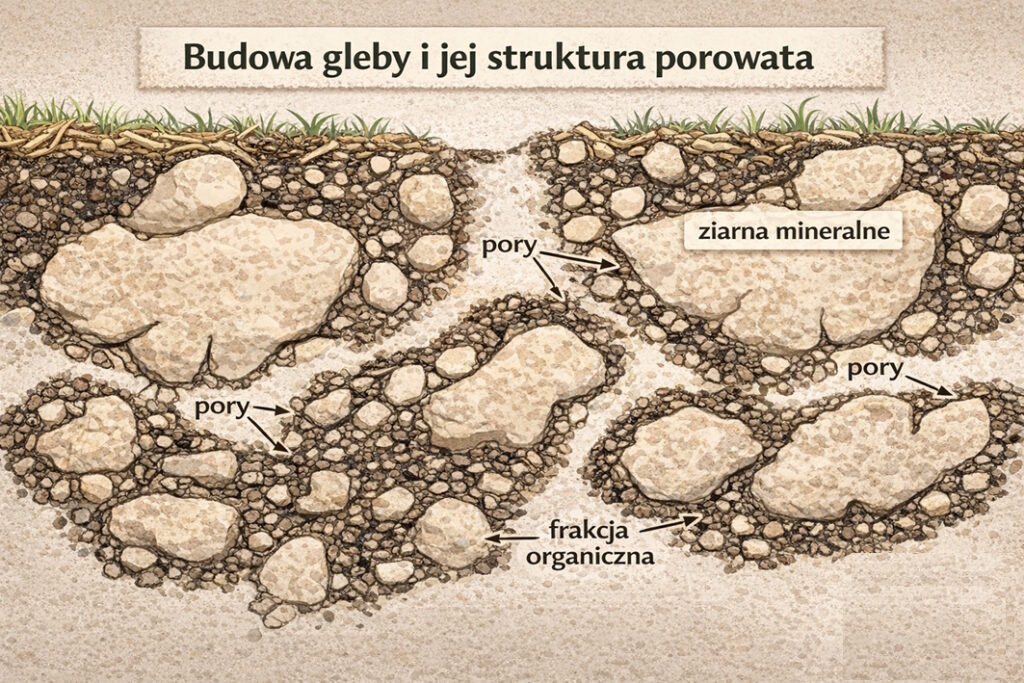
It determines whether the land works properly to produce crops high level of active soil biology, stable humus content and optimal sorption capacity of the substrate. Living soil is characterized by a dynamic circulation of elements in which microorganisms constantly transform organic matter into forms easily available to plants. The presence of durable humus guarantees the physical stability of the fields, protecting them against erosion, excessive compaction and sudden changes in pH. All these components create a balanced environment in which the root system can optimally develop its natural yield potential. An efficiently functioning station allows for effective management of water and fertiliser resources on the farm.
Low efficiency of mineral fertilisation as an alarm signal
Low efficiency of mineral fertilisation is a clear alarm signal blocking biological processes in the soil and the loss of its natural sorption abilities. In a substrate poor in microorganisms, pure chemical components provided in fertilisers are reduced to insoluble forms or are irreversibly washed out of reach of the roots. Despite using full doses of nitrogen, phosphorus and potassium, the farmer does not observe the expected yield response of the crops, which only generates high costs. This phenomenon proves that merely chemically feeding the site without taking care of its biological structure becomes pointless. Restoring the effectiveness of mineral fertilisers requires immediate regeneration of the soil sorption complex.
Comprehensive reconstruction of earth humus and increasing water capacity
The restoration of earth humus directly affects increasing the water capacity of the soil, transforming the topsoil into an efficient, natural moisture store. Humus has unique absorbent properties, thanks to which it is able to retain and store many times more water than its own mineral mass. Raising the level of organic matter drastically changes the retention parameters of the site at a depth of up to 30 centimeters:
- The 0,5% level of organic matter allows retaining only 80 000 liters of water per hectare,
- 1,0% level of organic matter increases retention to 160 000 liters of water per hectare,
- The 2,0% level of organic matter is the ability to store 320 000 liters of water per hectare,
- The 3,0% level of organic matter allows 480 000 liters of water to be retained per hectare,
- The 5,0% level of organic matter guarantees the storage of as much as 800 000 liters of water per hectare.
Increasing these water resources is the only effective method of protecting plantations against sudden periods without rainfall.
Correct water-air relations in the soil and crop development
Water-air relations in the soil determine the proper development of crops by ensuring optimal proportion between water-filled spaces and air ducts in an aggregate structure. A properly balanced substrate contains approximately 50% free spaces, which allows the roots to breathe freely and prevents dangerous anaerobic conditions. The availability of oxygen in the rhizosphere zone is necessary for the proper uptake of nutrients and the development of beneficial aerobic bacteria. Proper drainage of excess rainwater protects the root system against rotting and dying during periods of intense rain. Ensuring this physical balance creates a stable foundation for building high quality parameters of the crop.
Improving soil fertility after several seasons with Agrizaz technology
Improving soil fertility after several seasons of cultivation simplification can be achieved without the need to completely change the tillage system. The key to success is implementation technology based on natural humic acids and soil microorganisms. This solution simultaneously affects the physical, chemical and biological properties of the soil, accelerating the regeneration processes in the arable profile. The first effects of site regeneration are visible already in the first year of use in the form of even emergence and a stable start of young plants. The biological reconstruction of the arable layer causes the earth to regain its natural efficiency and begins to work efficiently to produce crops.
Activation of soil biology using humic acids
Activation of soil biology with humic acids involves: providing beneficial microorganisms with a direct source of energy and the optimal environment for multiplication in the rhizosphere zone. Humic compounds stimulate the development of lactic acid bacteria, actinomycetes and microorganisms responsible for fixing nitrogen from the air. The biologically active substrate begins to intensively process organic matter, preventing the occurrence of toxic putrefactive processes in the field. Thanks to this, the elements locked in the ground are transformed into forms that are easily absorbed by plants, which reduces the expenditure on traditional chemical fertilisation. Systematic microbiological biostimulation allows for permanent restoration of the natural yield potential of the site.
Humus Active and Plonagro – building plant resistance to drought stress
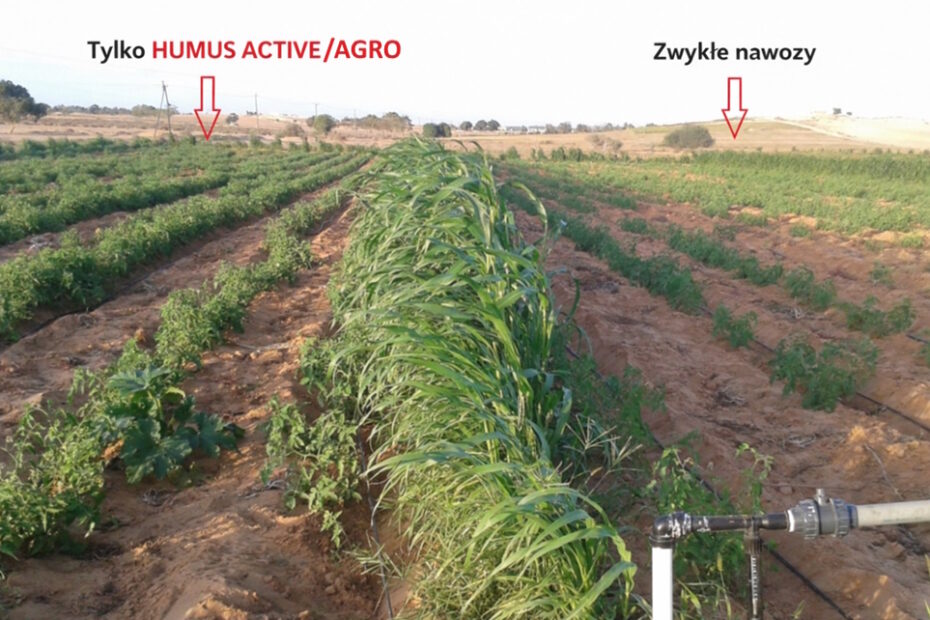
Products Humus Active, Humus Agro Booster and Plonagro granules support building the highest crop resistance parameters through dynamic development of the root system and improving the water retention of the field. Concentrated acids contained in these preparations facilitate the creation of durable humus complexes that store moisture in critical phases of vegetation. The increased underground volume of plants allows them to penetrate deeper layers of the earth in search of water and nutrients. Thanks to this, crops show much higher plant resistance to drought stress, cold or intensive chemical protection. The implementation of these solutions guarantees stable growth of crop biomass regardless of unfavorable weather anomalies.
Join the AGRIZAZ Patron Farm Program
In the 2026 season, AGRIZAZ is implementing the National Patronage Farms Program, which offers agricultural producers a unique opportunity to test advanced humate technologies on exceptionally favorable financial terms. The program operates based on precisely defined regulations and an official partnership agreement, guaranteeing priority and constant advisory support at every stage of cooperation.
Joining the partnership allows you to optimize production costs thanks to the Qualification Voucher system and cascading trade discounts:
- 50% discount for the purchase of AGRIZAZ brand products intended for your own farm,
- Additional 2% discount when fulfilling full-pallet, single-assortment orders,
- Additional 5% discount for each successful referral of another farm to the program (maximum two referrals).
Program participants actively engage in practical communication, sharing their opinions, photos and short video materials showing the effects of the products on social media, including the TikTok channel. Detailed rules for the recruitment and verification of applications, supported by the opinions of satisfied practitioners, can be checked by verifying the offer and the rules they offer Patronage Farms AGRIZAZ.
Change the soil humus balance to a positive one and increase your profits
Rebuilding the natural fertility of fields after years of simplification is a process that brings measurable agrotechnical benefits and high economic savings in the budget of every farm. The combination of humic acid technology with beneficial bacterial microflora allows you to effectively eliminate problems with soil drying out and crusting. Participation in the affiliate program is an excellent opportunity to increase the profitability of plant production with full support from experts.
Discover the full portfolio of certified soil improvers on the home page https://www.agrizaz.pl/ and choose the technology that will restore your soil to its full potential.